
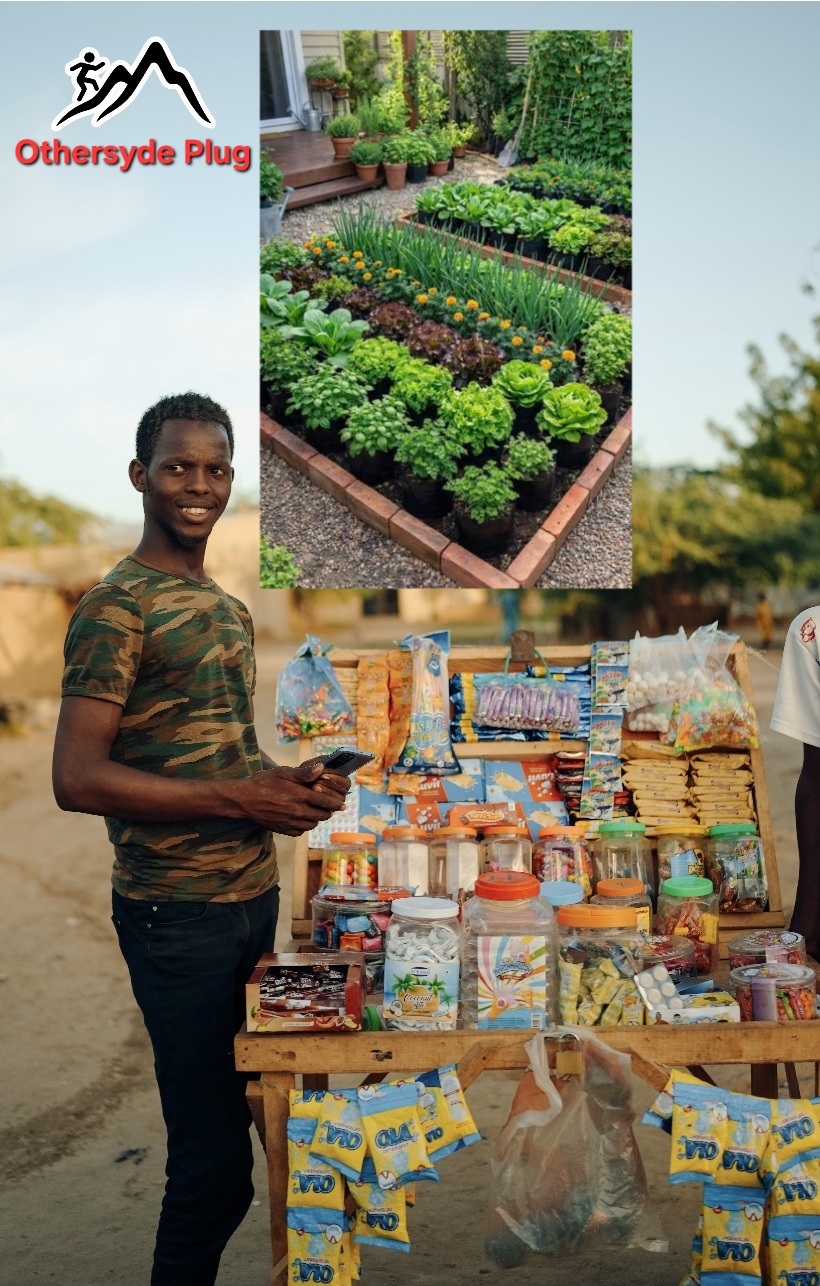
Meta Description: Learn how to start a small snack-pack and home-garden business in Kempton Park by growing vegetables, making affordable snack packs and selling legally in busy local areas.
Written by: OtherSyde Group
Editorial focus: Practical small-business ideas, local entrepreneurship and informal trading
Verification note: Municipal trading and food requirements can change, so always confirm the latest requirements with the City of Ekurhuleni before trading.
Introduction
If you are looking for a small business that can start with limited capital in Kempton Park, combining a home vegetable garden with affordable snack packs can be an interesting model.
The idea is simple:
Grow what you can at home → buy selected products in bulk → make affordable packs → sell where there is legitimate customer traffic.
You don’t need to start with a large shop. You can test the idea on a small scale, learn which products sell quickly and then reinvest your profits.
The important part is choosing a suitable trading location and making sure you comply with Ekurhuleni’s requirements for informal trading and food sales.
1. Start With Products People Buy Regularly
Don’t make your first product range too complicated.
Home-garden products
Depending on your available space, consider:
- Spinach
- Lettuce
- Spring onions
- Herbs
- Green peppers
- Tomatoes
- Chillies
- Cabbage
- Other vegetables suited to your growing conditions
You can sell them individually or create small vegetable bundles.
Snack packs
You could create affordable packs containing products such as:
- Chips
- Biscuits
- Sweets
- Popcorn
- Nuts where appropriate
- Fruit
- Individually packaged snacks
- Homemade products only where you meet applicable food requirements
The key is to create clear value at a price customers can understand quickly.
2. Combine the Two Businesses
This is where the idea becomes interesting.
Imagine you have a small garden producing spinach, spring onions and herbs.
Instead of selling everything separately, you could create:
“Fresh Home Garden Pack”
For example:
1 bunch spinach + spring onions + herbs
Then create:
“Lunch Snack Pack”
A small affordable pack containing selected commercially packaged snacks.
You now have two customer groups:
People looking for affordable food/snacks
and
people looking for fresh vegetables.
You don’t have to depend entirely on one product.
3. Choose Your Selling Location Carefully
The phrase “busy street” doesn’t automatically mean “good business location.”
You want the right type of traffic.
Look for areas where people naturally stop or pass slowly, such as:
- Transport interchanges
- Areas around legitimate taxi activity
- Near busy shopping areas
- Around approved informal trading facilities
- Near office concentrations
- Community shopping areas
- Areas where pedestrians regularly pass
But don’t simply put a table on a pavement and start trading.
Ekurhuleni requires informal traders to comply with municipal trading requirements, and the City has specifically urged informal businesses to obtain the necessary trading permits and licences.
The City’s trading framework also provides for allocated trading sites and permits.
The better strategy
Find the busy area first → ask the municipality whether trading is permitted there → obtain the appropriate approval → then build your business around that location.
ALSO APPLY JOBS AT SIYAQASHA.COM
4. Kempton Park Trading Requirements
Because you are talking about selling in Kempton Park, the City of Ekurhuleni is particularly important.
The City’s current trading application form requires information such as the type of goods being traded and the facilities being used. It also states that applicants must provide identification and proof of residential address and comply with municipal regulations.
The City has also identified Kempton Park Civic Centre, CR Swart Drive, as a location where business-registration assistance has been provided.
For food-related businesses, additional health requirements can apply. Ekurhuleni has warned food traders about compliance and food-safety requirements.
So before spending money on a permanent stall, confirm the current trading and food requirements with Ekurhuleni.
5. Start Your Garden Small
You don’t need a huge garden.
Start with whatever productive space you have available.
For example:
| Space | Possible approach |
|---|---|
| Small backyard | Herbs, spinach, spring onions |
| Medium garden | Multiple vegetables |
| Larger property | More crop variety |
| Containers | Herbs and selected vegetables |
| Raised beds | Useful where ground conditions are difficult |
The objective at the beginning is not maximum production.
It is learning:
What grows well? → What costs little to produce? → What do customers actually buy?
6. Don’t Grow Everything You Sell
This is an important business lesson.
If you grow only spinach but customers want tomatoes, your garden cannot satisfy the whole order.
You can therefore combine:
Your production + wholesale purchasing.
For example:
Grow spinach and spring onions yourself.
Then:
Buy tomatoes and peppers from a legitimate wholesale supplier.
You can sell them together as a fresh-produce pack.
As your garden becomes more productive, increase the proportion of products you grow yourself.
7. Calculate Your Snack-Pack Cost
Suppose you create a small snack pack.
Your calculation should include:
Products + packaging + transport + wastage + labour = actual cost.
Example:
| Cost | Example |
|---|---|
| Snacks | R5.00 |
| Packaging | R1.00 |
| Transport allocation | R0.50 |
| Wastage | R0.50 |
| Total cost | R7.00 |
| Selling price | R10.00 |
| Gross amount remaining | R3.00 |
These are illustrative figures only. Use your actual supplier prices.
If you sell 50 packs at R10:
50 × R10 = R500 revenue
If your total cost is R350:
R500 − R350 = R150 gross amount remaining
That is why you need to calculate your numbers before deciding what price looks attractive.
8. Create Different Price Points
One product at one price can exclude customers.
Consider creating:
| Product | Example positioning |
|---|---|
| Small snack pack | Affordable |
| Medium snack pack | Better value |
| Family pack | More products |
| Fresh vegetable bundle | Budget household option |
| Premium vegetable bundle | More variety |
The exact prices should come from your costs and the local market.
9. Make Your Stall Easy to Understand
A customer should be able to see what you sell within seconds.
Use simple signs:
FRESH HOME-GROWN VEGETABLES
AFFORDABLE SNACK PACKS
TODAY’S SPECIAL
Display prices clearly.
Don’t make customers ask:
“How much is this?”
Clear pricing makes a small street business look more organised and can make buying easier.
ARE YOU A NEW STUDENT NEED HELP?
CHECK STUDENT NEWS HRE
10. Keep Food Safe
Food businesses have an additional responsibility because customers are consuming what you sell.
Ekurhuleni has warned consumers about counterfeit and expired food and says food-handling premises can be subject to environmental-health inspections.
Therefore:
- Don’t sell expired products.
- Keep packaged food clean and dry.
- Don’t sell damaged packaging.
- Protect food from dust and contamination.
- Keep fresh vegetables clean and appropriately handled.
- Don’t alter expiry information.
- Store products appropriately.
- Follow the applicable municipal health requirements.
If you prepare food yourself rather than simply selling sealed commercial products, check the applicable requirements before starting.
OtherSyde Group’s Practical Perspective
If I were starting this business in Kempton Park with limited money, I would not immediately rent a shop.
I would start with:
1 small home garden + 2 or 3 vegetable products + 2 snack-pack sizes + one legally approved trading location.
I would spend the first month learning.
Every day I would record:
- How many packs were produced
- How many were sold
- Which product sold fastest
- Which product remained unsold
- Total daily sales
- Total daily expenses
- Customer requests
After four weeks, the numbers would tell me much more than guessing.
If customers repeatedly ask for tomatoes, increase tomatoes.
If nobody buys one particular snack, remove it.
If vegetables sell faster in the morning, adjust your trading hours.
That is how a small idea becomes a business: by listening to the market and changing according to evidence.
A Simple Starting Plan
Week 1 — Research
Identify:
- Customers
- Competitors
- Possible legal trading locations
- Wholesale suppliers
- Garden products
Week 2 — Prepare
Buy:
- Seeds/seedlings
- Basic gardening supplies
- Snack products
- Packaging
- Simple signage
Week 3 — Test
Produce a small quantity.
Don’t overstock.
See what people actually buy.
Week 4 — Improve
Calculate:
Revenue − expenses = money remaining
Then decide what to increase, reduce or remove.
Where to Find Information for Verification
For Kempton Park street trading, use the City of Ekurhuleni as your primary source for current permits, trading locations and municipal requirements. The City provides an informal trading application and has an online business-services portal.
If you sell food, also verify the current food-safety and health requirements before trading. Ekurhuleni specifically states that food-handling businesses must comply with applicable requirements.
Do not rely on another trader’s permit or assume that permission to trade in one location automatically gives you permission to trade somewhere else.
Conclusion
A snack-pack and home-garden business can be started relatively small.
The model is:
Grow some products → buy complementary products → create affordable packs → find customers → trade legally → record every sale → reinvest → expand.
The biggest opportunity is not simply finding the busiest street.
It is finding a busy, permitted location where the people passing by actually need what you sell.
OtherSyde Group shares this practical approach to help someone starting with limited resources turn a simple home garden and snack idea into a structured small business.
Before you begin selling on the street, verify the current Ekurhuleni trading permit, location and food requirements. Rules can change, and compliance should come before investing heavily in stock or equipment.
Start small. Sell what people want. Grow what you can. Keep your records. Then scale.