
Meta Description: Car wash, mobile car wash or driveway car wash? Compare startup costs, equipment, customers, water, location, risks and growth potential before starting your business in South Africa.
By OtherSyde Group
Car Wash vs Mobile vs Driveway: Which One Should You Start?
Starting a car-washing business can look simple from the outside: get cleaning products, wash vehicles and collect money. In reality, the business model you choose can determine how much money you need to start, how many customers you can serve, how much time you spend travelling and how easily you can grow.
There are three practical models worth comparing:
- Fixed-site car wash – customers bring their vehicles to your business location.
- Mobile car wash – you travel to the customer’s home, office or another agreed location.
- Driveway car wash – you operate from a residential driveway or provide a highly local service focused on customers’ driveways.
Mobile and driveway washing can sometimes overlap, but the important difference is the operating model. A mobile business is built around travelling to customers, while a driveway model can be deliberately designed around one residential location or a very small local service area.
So which one is better?
The answer depends on your capital, location, access to water, transport, customer base and long-term goals.
Quick Comparison
| Factor | Fixed Car Wash | Mobile Car Wash | Driveway Car Wash |
|---|---|---|---|
| Starting capital | Higher | Lower to medium | Low |
| Need for premises | Yes | No dedicated site | Usually home/driveway |
| Rent | Possible | Low/none | Low/none |
| Transport costs | Lower | Higher | Very low |
| Customer convenience | Medium | Very high | High |
| Location importance | Very high | Medium | High locally |
| Water planning | Important | Very important | Important |
| Customers per day | Potentially high | Moderate | Low to moderate |
| Scalability | High | High | Moderate |
| Best for beginners | Sometimes | Yes | Yes, if permitted |
| Main challenge | Rent and overheads | Travel and logistics | Space, neighbours and local rules |
The table is a practical comparison, not a guarantee of income or profitability.
1. Fixed-Site Car Wash
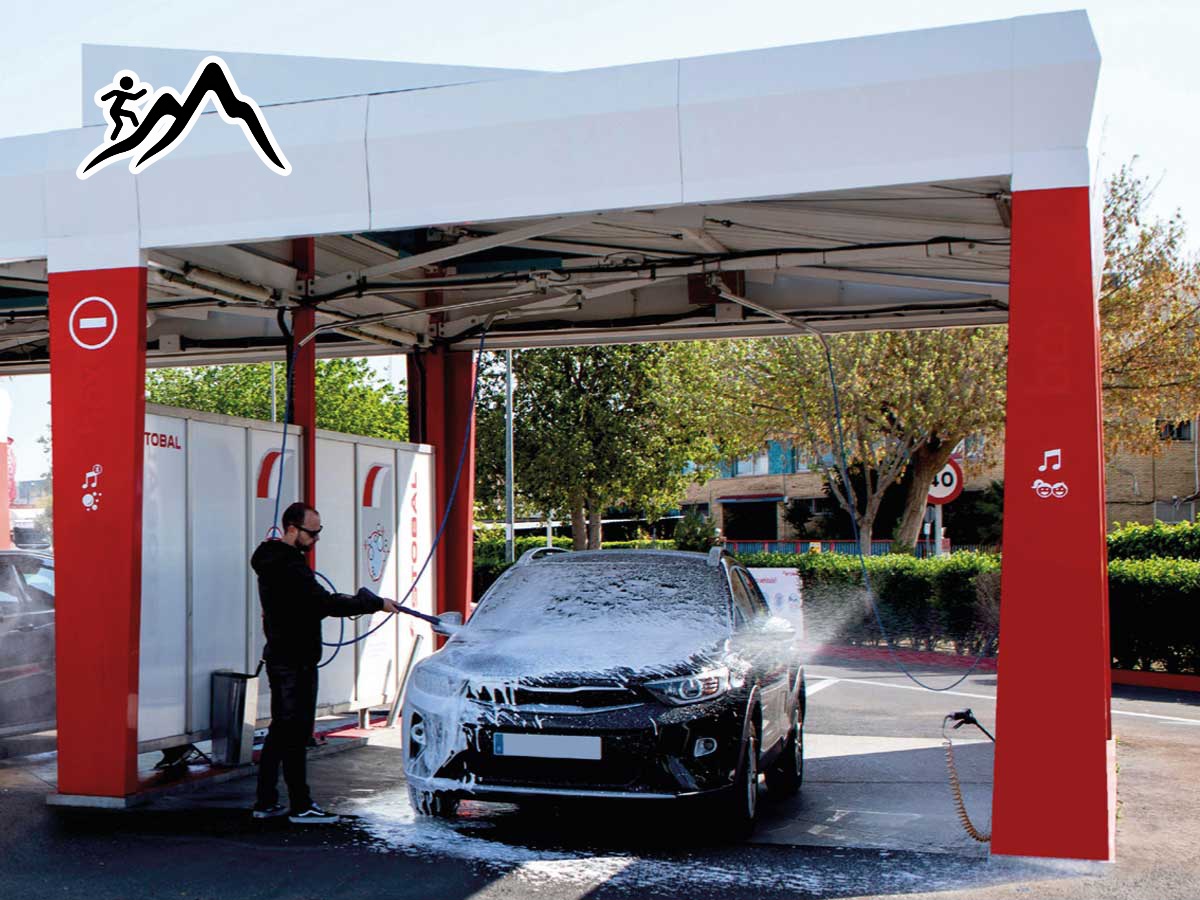
A traditional car wash operates from a permanent location.
Customers drive to your business, park their vehicles and pay for services such as:
- Exterior washing
- Interior cleaning
- Vacuuming
- Tyre cleaning
- Dashboard cleaning
- Waxing
- Polishing
- Detailing
- Fleet cleaning
The major advantage is volume.
If you choose a good location and create an efficient workflow, several vehicles can be processed without your workers travelling between customers.
The biggest advantage
Your business can become a visible destination.
A customer who passes your business every day may eventually become a regular customer.
The biggest disadvantage
The fixed-site model can become expensive before you even wash your first vehicle.
You may have to consider:
- Rent or property costs
- Site preparation
- Water supply
- Drainage
- Electricity
- Equipment
- Signage
- Security
- Staff
- Insurance
- Municipal requirements
- Working capital
Water and wastewater management deserve particular attention. Municipal rules can impose requirements on commercial vehicle-washing facilities, and these requirements can vary by municipality. For example, one South African municipal by-law requires certain commercial vehicle-washing facilities to recycle 50% of the water used.
Who should choose this model?
A fixed car wash makes more sense if you already have:
- A suitable property
- Strong vehicle traffic
- Reliable water access
- Appropriate wastewater handling
- Enough capital
- A clear customer market
Do not choose a location simply because many cars pass it. A busy road does not automatically mean customers can safely enter, park and use your business.
2. Mobile Car Wash
A mobile car wash takes the service to the customer.
Instead of asking someone to drive to your business, you travel to:
- Homes
- Office parks
- Residential estates
- Complexes
- Small businesses
- Fleets
- Dealerships
- Other approved locations
This model has become attractive because convenience is part of what the customer is buying.
A customer might think:
“Why should I spend an hour driving to a car wash and waiting when someone can clean my vehicle while I am at work?”
That is the value proposition behind mobile washing.
South African business guidance also identifies mobile washing as a lower-capital way to test demand before committing to a fixed premises.
The biggest advantage
You don’t need to wait for customers to come to you.
You can build your customer base around a specific area and organise bookings into routes.
For example:
Monday: Office Park A
Tuesday: Residential Estate B
Wednesday: Office Park C
Thursday: Fleet customers
Friday: Residential bookings
Saturday: Premium individual bookings
This can be much more efficient than driving randomly from one customer to another.
The biggest disadvantage
Travel can quietly destroy your profit.
Imagine charging R200 for a wash but spending significant time and money travelling between customers.
Your real calculation is not simply:
Price – soap = profit
You must consider:
Price – labour – fuel – water – chemicals – equipment maintenance – travel time – payment costs – other overheads = operating margin
This is why a mobile car wash should have a defined service area.
3. Driveway Car Wash
The driveway model is one of the simplest concepts.
You operate from your own driveway or provide washing services specifically at customers’ driveways within a very small local area.
It can be attractive for someone who wants to start small without immediately paying commercial rent.
For example, you could focus on customers within a few streets or a residential community.
Your offer could be:
Basic Wash – R80
Full Wash – R150
Wash + Interior – R200
These prices are only examples for planning. Actual prices should be based on your local market and your costs.
The biggest advantage
Extremely low travel costs.
If customers come to you, or you serve customers very close to your home, transportation costs can be much lower than a traditional mobile operation.
The biggest disadvantage
Your driveway is not automatically a legal commercial premises.
Before turning a residential property into a regular business location, check applicable municipal requirements, zoning, property restrictions, water rules and wastewater requirements.
Wastewater should not simply be allowed to flow into places where it can create a nuisance, environmental problem or public-health hazard. Municipal environmental-health rules can restrict how business wastewater is discharged.
There can also be practical issues involving:
- Neighbours
- Noise
- Traffic
- Parking
- Drainage
- Security
- Space
- Body corporate rules in complexes
- Landlord restrictions for rented properties
Which Model Needs the Most Money?
Generally, the capital requirement follows this order:
1. Fixed car wash — highest potential startup cost
You may need premises, infrastructure, equipment, signage, water systems and working capital.
2. Mobile car wash — medium startup requirement
You need suitable equipment and a reliable way to transport yourself and your equipment.
3. Driveway car wash — potentially the leanest model
You may already have access to the property and some basic equipment.
Recent South African business guides give broad illustrative ranges of roughly R3,000–R10,000 for a lean home setup, R8,000–R25,000 for a mobile setup and R10,000–R50,000+ for a small fixed site, although actual costs vary significantly depending on equipment, property and services.
These figures should be treated as planning estimates, not guaranteed startup costs.
Which Model Has the Best Profit Potential?
This is where many beginners make a mistake.
There is no automatic answer.
A fixed car wash can process more vehicles, but it can also have much higher overheads.
A mobile car wash can charge for convenience, but travel reduces productive hours.
A driveway business can have low overheads, but the number of vehicles you can handle may be limited.
Consider this simple example.
Suppose a business charges R150 per vehicle.
If it washes:
5 cars per day × R150 = R750 daily sales
At:
25 working days = R18,750 monthly sales
That is revenue, not profit.
You still need to subtract expenses such as:
- Cleaning chemicals
- Water
- Electricity
- Fuel
- Labour
- Equipment maintenance
- Rent, if applicable
- Marketing
- Payment fees
- Repairs
- Taxes and other business costs
The lesson is important:
Do not build your business plan around revenue alone.
Which One Is Best for a Beginner?
For someone starting with limited capital, I would generally look at the models in this order:
Start small → test demand → build repeat customers → expand
That could mean starting with a driveway or mobile model instead of immediately signing a long commercial lease.
Why?
Because your first objective should not be to look like a large company.
Your first objective should be to discover:
Will people actually pay for my service repeatedly?
Once you have regular customers, you have evidence that the business is working.
You can then consider buying better equipment, hiring staff, expanding your service area or moving into a permanent site.
Mobile vs Driveway: Which Is Better?
This is a particularly interesting comparison.
Choose mobile if:
- You have reliable transport.
- You want to serve offices and homes.
- You want to reach a larger market.
- You can manage bookings efficiently.
- You are comfortable travelling.
- You want to build a recognisable mobile brand.
Choose driveway if:
- You have a suitable property.
- Your local rules allow the activity.
- You want very low transport costs.
- You want to start with a small customer base.
- You live in an area with potential customers.
- You want to test the business before expanding.
The driveway model can eventually become mobile.
For example:
Stage 1: Wash neighbours’ cars.
Stage 2: Build repeat customers.
Stage 3: Add mobile bookings.
Stage 4: Buy better equipment.
Stage 5: Hire an assistant.
Stage 6: Consider a fixed site.
This creates a more controlled growth path.
What Equipment Do You Need?
Your equipment should match your business model.
Basic setup
You may need:
- Buckets
- Microfibre cloths
- Wash mitts
- Brushes
- Car shampoo
- Tyre cleaner
- Drying towels
- Spray bottles
- Gloves
- Wheel brushes
- Interior cleaning products
More advanced setup
You can add:
- Pressure washer
- Wet-and-dry vacuum
- Water tank
- Hose reels
- Generator or suitable power solution
- Polisher
- Extractor
- Professional detailing equipment
Do not buy every piece of equipment on day one.
Start with the services customers actually want.
If most customers only want exterior washing and vacuuming, spending heavily on advanced detailing equipment may delay your ability to generate cash.
Water Is a Business Issue, Not Just a Cleaning Issue
A car wash uses water, so water management should be part of the business plan from the beginning.
Before operating, determine:
- Where your water comes from
- How much water your process uses
- Where wastewater goes
- Whether your municipality has specific requirements
- Whether recycling is required
- Whether your property is suitable
- Whether water restrictions affect your operation
South African rules can differ between municipalities, so entrepreneurs should not assume that because one car wash operates in a particular way, the same arrangement is automatically permitted everywhere.
What About Business Registration?
Choosing a car-wash model does not remove ordinary business responsibilities.
Depending on how you structure the business, you may operate as a sole proprietor or establish a legal entity such as a private company.
SARS currently explains that sole proprietorships are taxed on the individual’s profits, while companies and other legal entities have different registration and tax arrangements.
SARS also currently lists a R2.3 million turnover threshold for Turnover Tax for qualifying small businesses, effective from 1 April 2026, while VAT thresholds were also adjusted from that date. The correct tax treatment depends on the business and its circumstances, so verify your position directly with SARS.
The Business Model I Would Test First
Mobile + Local Driveway Hybrid
For a new entrepreneur, there is another option that combines the strongest features of both models.
Instead of travelling everywhere, create a small service radius.
For example:
0–5 km: Standard price
5–10 km: Small travel fee
10 km+: Booking minimum or higher travel fee
You can also encourage customers to book together.
Imagine five people in the same complex.
Instead of making five separate trips, you can wash five cars in one location.
That changes the economics of the mobile business.
You are no longer selling only a car wash.
You are selling:
Convenience + grouped bookings + reliable service.
OtherSyde Group’s Practical Perspective
From a business-building perspective, the biggest mistake is starting with the question:
“Which car wash makes the most money?”
A better question is:
“Which model can I operate consistently with the money, time, equipment and location I have today?”
A R100,000 business that has expensive overheads and few customers is not automatically better than a R10,000 operation with loyal repeat customers.
For a first-time entrepreneur, I would rather see someone test a small mobile or driveway operation, learn how customers behave, calculate the real cost per wash and build repeat business before taking on major fixed expenses.
The business can then grow from evidence instead of assumptions.
Final Verdict: Car Wash vs Mobile vs Driveway
| If your priority is… | Consider |
|---|---|
| Lowest initial risk | Driveway |
| Very small starting capital | Driveway |
| Reaching customers directly | Mobile |
| Convenience | Mobile |
| High vehicle volume | Fixed car wash |
| Building a large operation | Fixed car wash |
| Testing the market | Mobile/Driveway |
| Low travel costs | Driveway |
| Premium convenience service | Mobile |
| Long-term physical location | Fixed car wash |
My overall recommendation
If you are starting from zero, don’t rush into a large fixed-site car wash.
Start with a lean driveway or mobile model, prove that customers will pay repeatedly, understand your costs and then expand.
If you eventually have enough customers to justify a permanent location, a fixed car wash can become the next stage.
The strongest model is therefore not necessarily car wash vs mobile vs driveway.
It can be:
Driveway → Mobile → Fixed Site
That progression allows the entrepreneur to learn, build a customer base and reinvest instead of carrying large overheads before demand has been proven.
Where to Verify Before Starting
Before spending money, check information from:
- SARS for tax and business tax obligations.
- Your municipality for zoning, trading, wastewater, water-use and environmental requirements.
- CIPC if you decide to register a company.
- Your landlord, body corporate or property owner if you will operate from rented or sectional-title premises.
- Your local water authority where applicable.
Requirements can differ by municipality, so local verification is more important than copying another car wash’s setup.
Frequently Asked Questions
Is a mobile car wash better than a normal car wash?
Not automatically. Mobile washing can reduce the need for a permanent site and offer customers convenience, but travel, water, transport and scheduling become important costs.
Can I start a car wash from my driveway?
Potentially, but you should first check municipal, zoning, property and wastewater requirements. A residential driveway should not automatically be assumed to be approved for commercial car-washing activity.
Which car wash is cheapest to start?
A basic driveway or lean mobile operation can generally require less capital than establishing a permanent commercial car wash.
Can a mobile car wash become a bigger company?
Yes. You can build from individual bookings into subscriptions, fleet contracts, multiple mobile teams and eventually a fixed facility.
Is a car wash profitable?
It can be, but profitability depends on pricing, customer volume, labour, water, chemicals, transport, rent, equipment maintenance and other operating costs. Revenue should never be confused with profit.
Conclusion
The best car-wash business is the one that matches your current resources and local market.
If you have little capital, consider testing a driveway model.
If you have transport and want to sell convenience, consider mobile washing.
If you have capital, a suitable location and proven demand, a fixed-site car wash may offer greater capacity.
The smartest approach for many beginners is not to spend heavily immediately. Start small, measure demand, improve your service, build repeat customers and expand when the numbers justify it.
A successful car wash is not built by buying the biggest pressure washer. It is built by creating a service customers trust enough to use again.